Monday, January 15, 2018

Weekly Advice

It's early (ok, "mid") January, therefore it is important to:


  • Not care too hard about any performance whatsoever
    • For example, I just ran a 38+ minute 10k after a week of being sick. Was it lame? Yes. Does it matter? Nope.
    • Did your FTP test go poorly? Well, it's January. If your FTP test went really well I'd have much suspicion regarding how you spent your "off season." 
  • Do fun stuff
    • See previous post, and continue to reference this step throughout the year but with special focus on "winter" months.
  • Establish trends
    • Running 6 days a week? Check. Good trend to start.
    • Eating vegetarian? Meh, but give it a whirl.
    • Eating less dessert? That's a good, if not fun, trend.
    • Saving more money? This is triathlon, you don't get to save any of your money.
  • Do stuff that you won't have time for later
    • Doctor's appointments
    • House work
    • Cleaning your house
    • Making food at home
    • Saving money
  • Stay warm
    • Live in the Southwest
That does it for the weekly advice column. Follow these guidelines and you will be SET.


Monday, January 8, 2018

Weekly Advice

Since I am finally not feeling sick (don't tell that to the 30 minute run I did this morning though, blech) I am allowed to feel mildly inspired, so bear with me.

I have some over-arching thoughts on what the winter means for triathletes and some of the realizations that you should come to sooner rather than later if you're interested in long term success (note that "success" can be defined however you want it. A simple notion but one that is oft-forgot).


  • Don't get too caught up in what you eat or drink or do between Thanksgiving and the start of the New Year. If you don't vent a little, you'll explode. Just go watch the episodes of Mythbusters where they blow up hot water heaters to see how that looks. 
    • Just remember: everything in moderation
      • But it's ok to be excessive 
        • on occasion
  • Find some friends
    • This cannot be overstated. Humans need interaction. Most do anyway. Even if it's virtual. But in reality (haha, get it) we all need some face to face. Training is best done with buddies. You'll be far happier in the long term and you'll push yourself harder, generally.
      • That last bit can be a double edged sword. Be smart, don't get into too many d***-measuring contests. 
        • That isn't just a guy thing, either.
    • Get into some group stuff
      • And I don't mean the 3 way at the house down the street, I mean the swim group that some of your friends talked about last month, or the ''Vegetarian Potluck Friend Dinners" that sounds like a lot of work but actually isn't. Go bowling. Play TopGolf. Take dancing lessons.
  • Generally, don't be a dick.
    • This one seems easy and straightforward, but we all forget here and there. I generally forget when I'm online somewhere like Slowtwitch. Or I get an itchy clicker finger while reading some politically-infused social media post. But usually if I just write that email, or write that post, and then refrain from publishing and erase it, I feel way better AND I wasn't a dick! 
    • This one's tougher in winter because we're all generally in closer proximity with each other (especially you people in a place with a real winter; it's 75 here today FYI) and we tend to wear on each other a little more when we haven't seen sunlight in a while or our toes have been little blocks of ice cubes for the work week. 
    • Wave to people on your f***ing bike ride is a good start.
  • Experiment
    • Do different stuff. The "routine" and "consistency" are great when it comes to life and training, but we can really only burn so many "consistency" matches throughout the year. Take some time to store up some of those matches by doing something that is NOT routine, and is NOT about consistency. 
That's enough for this post. What are some fun things you tried this fall/winter??


Thursday, January 4, 2018

Remember, as a kid...

I used to WANT to be sick so I could stay home from school that day. I had strategies for this. My mom would bring the thermometer into the bedroom when I woke up saying I felt "bad" and when she left to go do something else I'd take the thermometer and stick it up close to the lamp's lightbulb by my bed. This was both genius but also a backfire, occasionally. My mom tended to not believe me when she came back and the thermometer said "180*" or something like that... But, if I could get the distance to bulb juuuust right, the temperature would be something believable. Voila!

Of course, when you're actually sick, you can't imagine EVER wanting to be sick. It basically feels as though you'll never be healthy again. You basically feel as though you will always be ''damaged goods.'' People have to take care of you, which you want but also don't want. Your normal routine gets put completely on hold. If you're an athlete, you kick yourself for missing scheduled or unscheduled workouts.

I am writing this (I'm sure you've inferred as much at this point) because I am currently sick with a fever. I've done a fair amount of reading as I've been waylaid in a far corner of the house so as not to get Christine sick. I finished the latest Jack Reacher novel and read Artemis today, the new book by Andy Weir (The Martian). Quick book review:

Reacher is still a fun character to follow. But each story (there's almost 20 at this point) grows a bit more predictable (in terms of story arc, not specifics). It's inevitable, I suppose. I can barely post a new blog once a quarter and this guy is putting out a NYT bestseller about once a year. Goals...

Artemis is an entertaining story, but there are some mildly odd factors present in its storytelling. Weird reliance on sex/vulgarity (for reference, there was no sex during the book, but it was discussed a lot) when it really contributed nothing to the story. It's hard to top that sort of: "Dang, this book is reallyyy entertaining and Watney is just a character that feels really...real and I really like rooting for him" when you finish The Martian.

Anyway, don't ever wish for being sick kids. It is no fun.


Thursday, November 9, 2017

Safest cities for cycling

A thread popped up on Slowtwitch this week that piqued my interest, because the "original poster" (OP) asked the question: "What city is the safest for cycling year round?" As you can imagine, every response has been different. Everyone that enjoys the cycling where they live (and those that hate it) has responded suggesting that, in fact, THEIR city is the safest. It's a fairly self-selected "poll," as the only people that will respond are the people that likely feel strongly about their answer. Plus, most people simply "lurk" on ST anyway and don't ever post, so the ''poll'' is extremely biased.

Anyway, it got me to thinking: what makes a city safe for cyclists?

Well, it really begins and ends with the city's civic planning system and infrastructure. Certain cities will likely never be "safe" for cyclists (all cyclists, whether they be recreational, commuters, messengers, hobbyists, just a bit of fitness, etc) because the city cannot change the existing patterns. Charlotte kind of feels like this. I cannot imagine Charlotte being a safe place to ride a bicycle outdoors. There is no room to change the dynamic. There are only so many ways "in "and "out" of places in the city that are just absolutely littered with cars. New Orleans is like this as well, but more so because the streets are so rough and relatively narrow and the city itself is so "hemmed in" by the surrounding landscape (a big ass river and a big ass lake) that the number of cycling routes to even get outside the city is basically...1.

Anyway, I could make a strong case for Tucson being one of the most bicycle friendly towns in the US (that I have been to and ridden my bike in <--- a="" drastically="" for="" great="" i="" nbsp="" reduces="" s="" sample="" size="" starters="" the="" there="" this="">government website
 (hmm, oxymoron anybody?) dedicated to the "Bicycle and Pedestrian Program." I'm actually just kind of diving into this website now but man, it is extensive. You can even get a list of current projects and see what is going on as it happens and in what stage of development are individual projects. But the over-arching goal seems to be connectivity and ease of use.

Cool bridges everywhere. You can look down on cars, literally AND figuratively

Signage is solid, but having google maps handy is equally solid

If I want to, I can ride basically anywhere in Tucson and follow protected bike routes. The protection can vary from "The Loop" (fully pedestrian/bike pathways) to "Bike Boulevards" ("residential streets designed to prioritize bicycle and enhance conditions for walking") to simple bike lanes on regular streets. The key point is that I can feel safe riding all 3 of those types of routes. There are definitely sections with more vehicular traffic than others, but I can design a route to minimize those parts and favor the safer parts.

Safety first

See? Cool bridges everywhere
Not only ALL THAT, but the routes for cyclists and triathletes outside of the confines of the city proper are, for the most part, very good. Lots of choices in all directions.

At the end of the day, we - as cyclists - can only control so many variables. I can have bright clothing, bright lights (day or night), a cognizance of the rules, etc, but it really all depends on the drivers and other cyclists. Unless we are truly protected via infrastructure and planning...it's an inherently risky activity! So, ride on! (safely)


Monday, October 23, 2017

What I've learned from 130+ straight days of running

So back in mid-April I was running with Christine and Amy while they were doing a long run and another local triathlete showed up from behind us as we were just starting. Ben is a very accomplished tri guy who had just recently had a very good race in Africa. During this run I asked him a few questions about his race and one of the things he said stood out to me at the time and it was basically about how confident he was in his run because of how consistently he had been running during his big training block leading into the race. He had inadvertently (somewhat) had a running streak going that ended the day after the Africa race. I didn't think too much about the idea of a streak at the time but as the spring and summer wore on and my training kind of took a nosedive I wanted to do something that would sort of galvanize some run fitness and consistency.

So a week or two after Deuceman (which completely kicked my ass) I decided I'd start a run streak. I'd run every day for at least 20 minutes. 20 minutes seemed like a good number; not too much and not too little. Anywhere from 2 miles on a real bad day to 3 miles if I was feeling uber-sporty. I started this streak with a trip up to Wasson Peak with Ryan, which was a tough way to start because that is a legit mountain climb...


From that day forward to now, I have run about 850 miles with quite a few double run days somewhere in there. I've done one race (World Champs), which made it hard to continue the streak in the first few days after the race. I've averaged about 6.5 miles per day, with a long run of about 17 miles.

Somewhere in there I decided to do a running race or two, and the first ''test'' will be this upcoming Sunday at a flat half marathon here in Tucson. So in the previous 4 weeks I've put in about 250 miles and had some pretty solid, quality workouts in there. I know none of this has been ''a lot'' of miles for a runner, but it's been a few years since I've really put in some solid run volume and for better or for worse I just always have been a run volume fan. I ''feel'' better as a triathlete when I am running 5+ times a week.

Anyway, I haven't done a half marathon as a stand-alone event since 2010 at Charlotte's Corporate Cup. And yes, I wrote a blog about that! I've had a few half-ironman runs that were actually faster than that race, but I've never really seen how close to the envelope I can drag myself with no swimming and no biking. I don't have especially high expectations, but I know for sure I will go sub 1:20 but above 1:15. So that's my best guess ;)

Regardless, what have I learned from this streak?

1) Running more makes you faster at running
2) Staying healthy when you're building can be difficult, but prevention is the best medicine
3) Running every day sometimes really sucks
4) You need many pairs of shoes and many, many pairs of running shorts or you're going to be doing a lot of laundry
5) In reality, if you are running 40-50+ miles a week, running every day is really not a great idea
6) You will likely hurt yourself
7) and discover how gross your feet can get

I know at the end of the day 130+ days and 40+ miles/week are not, by any means, a lot for a "runner." Be that as it may, it's more than I've done in quite some time and I've noticed the effects fairly dramatically in the past month. Paces that I've not done in a while feel - practically - easy and while little aches and pains have come and gone I've managed to stay healthy and in motion during the streak.

So, here's your final lesson:

1) It doesn't matter how fast you bike if you run like ass
2) More is more, until it's not
3) Some quality is better than no quality
4) Bike for show, run for dough

Monday, October 16, 2017

Mountain Biking for Dummies - TIRES

Everything that’s been said before, be it a general comment about frame type or what type of suspension to look for, doesn’t matter.  Yes, I said that.  All thousands of words I’ve already written on mountain biking are relatively useless if you don’t get the fourth part correct.  What IS that mystical fourth part, you ask? Well, it’s tire selection.

Why are tires so important?

That’s a good question, and it’s an easy one to overlook and take for granted. You can have the nicest $10,000 mountain bike with extremely high level components, suspension, and frame and yet be totally lost if you’ve got the wrong tire for the job you’re doing. Conversely, you can have an extremely beginner bicycle but if your tire is paired perfectly to your trail and riding style you can easily drop your buddy on the ultra expensive machine and, let’s be honest, who doesn’t like dropping their buddies every now and then??

I am, admittedly, being a bit dramatic (I tend to do that in these types of things) but that is ONLY to make a point! Any bike you buy will likely come with tires that are simply “pretty good” at most things.  They’ll do a fine job of accommodating your needs and desires.  That being said, as you become more and more familiar with your comfort level and appropriate riding skills you may find yourself wanting to explore tire choice and selection a bit more.  It’s different than road cycling, where tires are definitely important in terms of how fast you go or how many punctures you get but play very little role in how fast you can take a turn or how quickly you can slow down or get back up to speed.

Mountain bike tires essentially fall into two categories: tubed and tubeless (if we’re getting nitpicky you can also find tubular mountain bike tires, but those are not very common at all).  Tubed tires will be familiar to everyone that is familiar with bikes; there is an inner tube that is inflated and holds the tire’s shape.  TubeLESS tires have no inner tube; the tire hooks into the wheel’s rim and through a combination of specific rim tape and liquid sealant, stays inflated and rigid.


Tubed tires and tubes in general are the easiest from an upkeep standpoint.  If you get a flat you simply replace the tube. There is no sealant to refill and there is no difficulty in getting the tire to “attach” and inflate the first time you install it (which can be difficult with tubeless tires). The downside to a tubed system is that it generally weighs more and you run a higher risk of pinch flatting (this is what happens when you go over some sort of bump and the tire/tube compresses so much that the tire pinches the tube between the metal rim and the tire which, in turn, punctures it).  This is not particularly common in road cycling but, as you can imagine, is more common on trails as there are far more obstacles to roll over with your tires.  

Tubeless tires are generally considered preferable, as you eliminate the tube and any risk of pinch flatting.  You can run the tires at lower psi, which increases your available traction (the tire “grips” surfaces better) and the system usually weighs less.  There is less risk of flats as well, as the liquid sealant running around in the tire (about 2 ounces worth) rushes to the site of any small cut or puncture (think of the sealant as platelets in your blood!) and seals the hole and you can continue riding and may never even know you got a puncture.  Obviously, some cuts or punctures will be too big for the sealant and you should always run with a flat repair kit.  Installing a tube into a flat tubeless tire is very easy and is what almost everybody carries with them while riding (whether riding tubed tires or tubeless tires).

Every single mountain bike you buy, however, will come with tubes (as far as I’m aware, unless the shop has set it up tubeless out of the box). Most mountain bikes that are above $1000 or so are “tubeless” ready and you can easily ask your shop to set it up that way once you are comfortable with the idea.  You merely have to buy sealant and, potentially, rim tape; neither of these will set you back more than $30-$50 (including installation).

Tread types are very important when it comes to confidence and technical skill, so it’s important to learn some about what makes certain tires more suitable for certain conditions and different environments.


Tire tread is essentially composed of three elements: center knobs, transition knobs, and side knobs.  Each of those plays a pretty specific role in maintaining traction, which is a tire’s ultimate goal. If you are riding in loose soil you want deeper penetration. If it’s harder soil (think desert conditions) you don’t need as much penetration. So the SIZE of the knobs is important insofar as it relates to the density of your surface.

The number of knobs is also related to surface conditions; the more knobs you have the less each individual knob will penetrate the soil, which is what leads to traction.  So harder soil means you can run more knobs in your tread and maintain adequate grip. Looser soil means fewer knobs, each of which will penetrate the soil more.

The placement of those knobs is also important.  Looser soil means you generally need to have a decent amount of space between the knobs so that once the soil has been penetrated it has channels to run through, so to speak.  Loose OVER hardpack (commonly found in the southwest) generally demands this type of tire.  Nice channels that run between your side knobs and center knobs, but the center knobs can be more dense (i.e. more of them) while the side and/or transition knobs can be less dense but perhaps bigger.


Interestingly, riding style also plays a role in tire selection.  Some cyclists LEAN the bike quite a bit through turns and as a consequence they don’t really need transition knobs as they go from “upright” to leaned over and get plenty of traction and control in that leaned position.  So more “aggressive” riders tend to prefer a tire with bigger channels.  Riders who don’t lean the bike aggressively (which is most riders) find tires like that to have a sudden cliff in terms of traction.  They don’t lean the bike aggressively and therefore never really contact the side knobs, so the bigger channel robs them of confidence and traction in the corners.

Ultimately, tire choice is about experimentation.  Finding a good front/rear combination that works for you and your riding style/location is often trial and error.  Knowing certain things about tires themselves, however, can help you make more informed decisions.  I’ll give you my own personal example here:

In Tucson, leaning your bike (i.e. making aggressive turns) is difficult because it feels like there is  cactus around every corner.  So if I lean, I get spiked.  As a consequence, I do not turn or lean the bike nearly as aggressively as I did back on the east coast. So my tire choice in that respect is different.  The soil conditions here in Tucson are also wildly different than North Carolina.  The soil there was grippy, generally, and had a bit of give to it.  The soil here is extremely hard underneath a very loose layer of rock and sand.  So tire choice is different in that respect as well.  Furthermore, all of the rocks here are out to kill you and your bike.  So my tire choice needs to be a bit more durable (extra puncture layers or sidewall protection) if I want the tires to last more than a couple of weeks’ worth of riding.

So, it’s important to experiment and figure out what works best for you, where you live, and how you ride! But use some of these keys to help you make your decision!

Monday, September 25, 2017

Mountain Biking for Dummies, Part 3

For reference, here are parts 1 and 2.

Wheels, hubs, and axles OH MY!

Here we are in our third installment of The Mountain Bike Series!  We are now deeply educated individuals when it comes to the basics of mountain bikes in general and the basics of their suspension systems.  Along those lines, we’re going to take today to look into the basics of wheel systems.

The first step is to look at the various wheel sizes offered with off-road bikes, which come in varieties of 29 inch wheels, 27.5 inch (or called 650b), and 26 inch wheels.  For quite a long time, 26” was the only option.  You will still find 26” sized wheels on entry level bikes, youth bikes, and even some (adult sized) “downhill” bikes.  With the exception of the downhill bikes, you will really only find 26” on what could be classified as “entry level” bicycles.  It has been generally agreed upon that “bigger is better” when it comes to mountain bike wheel sizing.  

So most of the choices we - as new mountain bike purchasers - will make are going to fall into either the 650b or 29” category.  Let’s examine some pros and cons of each, shall we?

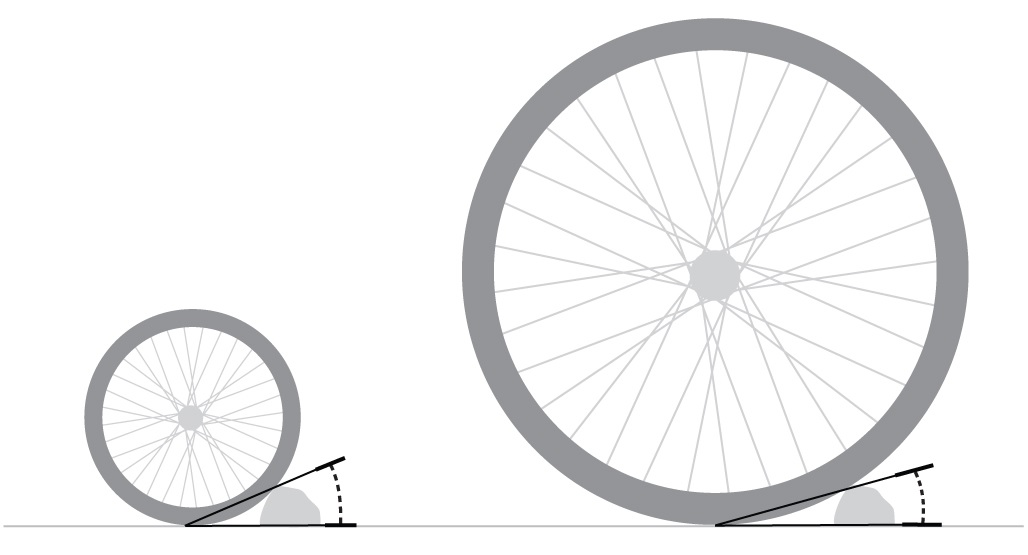
When 29” wheels first came out (which was before my time) they were - like many new things in the cycling world - met with skepticism.  These huge new wheels weighed more, looked silly, and couldn’t possibly be better, could they?  Well usually: yes, they are better than 26” wheels in almost all applications.  Some of the things you might not think about at first glance are the bigger contact patch with the ground and the shallower angle of attack these wheels will have as compared to their smaller brethren.  The bigger contact patch is simply due to the larger circumference of the wheels, which results in more of the tire coming into contact with the ground.  The benefits of this are obvious, as there is more grip for cornering and braking.  The shallower angle of attack is a little more difficult to explain, but it essentially means that every object encountered on the trail is smaller as it relates to the wheel itself.  As a consequence, a 5 inch tall rock which, with a 26” wheel, would’ve been met a bit more “head on” is now lower on the 29 inch wheel.  This picture makes it more obvious, although the size disparity is a little dramatic:
angle of attack.jpg
So the bigger wheel gives the rider a little more room for error.  It makes obstacles “ride” smaller, it makes drop-offs easier to deal with, and in general it feels as though you cover more ground more quickly as compared to smaller wheels.  The wheels do, in fact, generally run a bit heavier.  Is this a big deal? In my opinion definitely not, but some may argue that the bigger wheels are more difficult to “spin up” or get up to speed, but to be honest I have not compared a 29” bike to a 26” bike so can offer no personal perspective.  It IS noticeable, however, when doing tight and twisted singletrack at slow speeds that a 29” bike can have more trouble than a smaller wheeled bike.  The bike has a longer wheelbase and bigger wheels and, as a consequence, can be more difficult to maneuver around tighter, smaller radius turns.

The 27.5” or 650b standard is newer and was created in no small part to resolve some of the concerns mentioned in the previous paragraph (or maybe it was created just to create more bikes to buy??).  Without taking into context the size or style of a bike, the 650b standard is most often viewed as a “best of all worlds.” It has many of the benefits of the larger wheels, such as better angle of attack and bigger contact patch, but with a lessening of the drawbacks such as weight and maneuverability.  It is still a bit newer but has mostly caught up in terms of availability of tire selection and wheel brand choices.

In my personal opinion, if I am looking for a cross country or trail bike I am probably going to say go with whatever size wheel “feels” appropriate.  For example, on a medium or large (or extra large) bike, 29” wheels are likely NOT going to feel “big” to you.  On the other hand, if you ride a small or extra small frame then 29” wheels likely ARE going to feel big, and as a consequence I’d say focus more on 650b bikes lineups.  If, on the other hand, you are looking for a big hitter bike (all mountain, DH, etc) then it’s much more normal to see 650b wheels on those big travel bikes.  

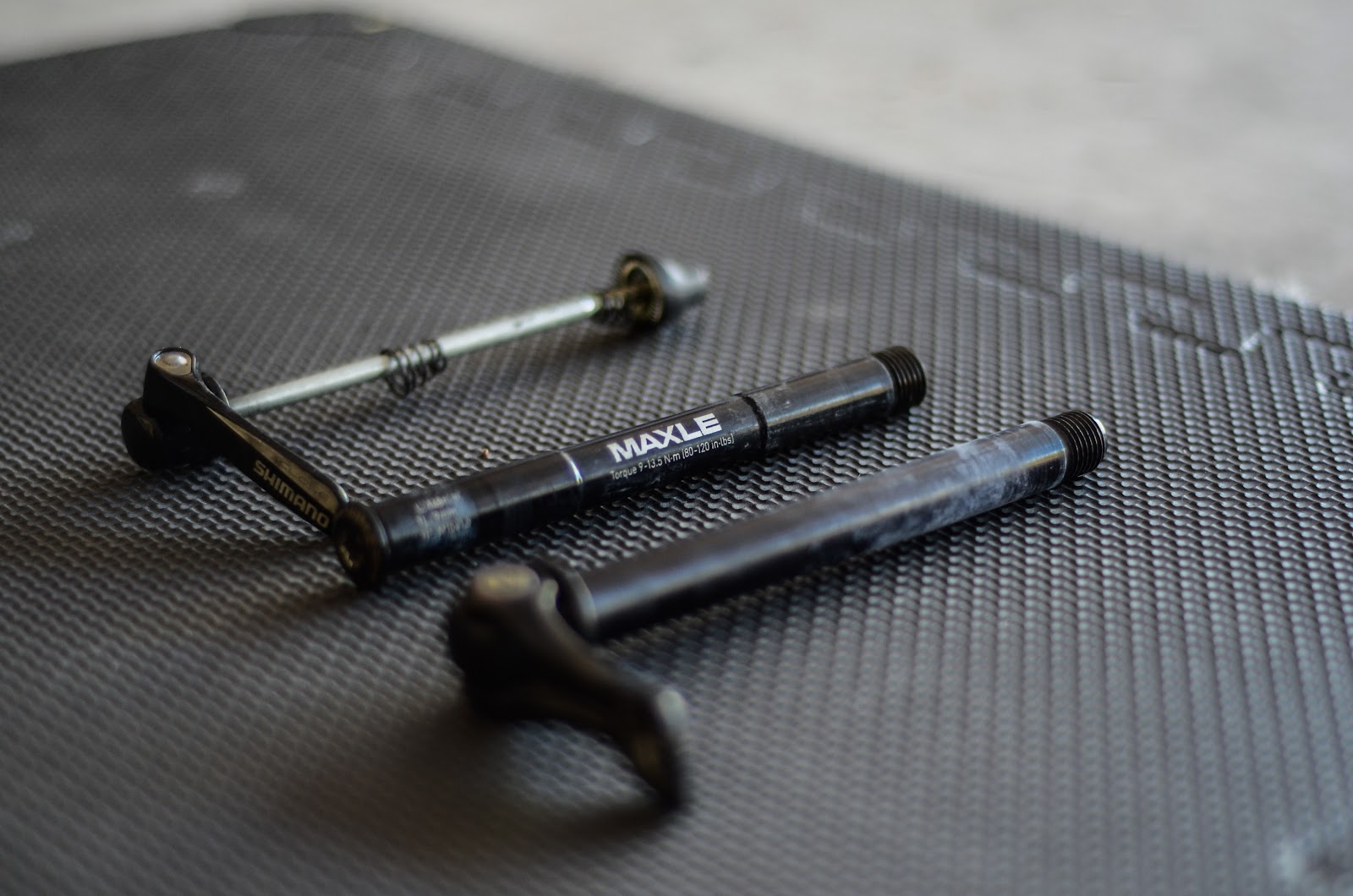
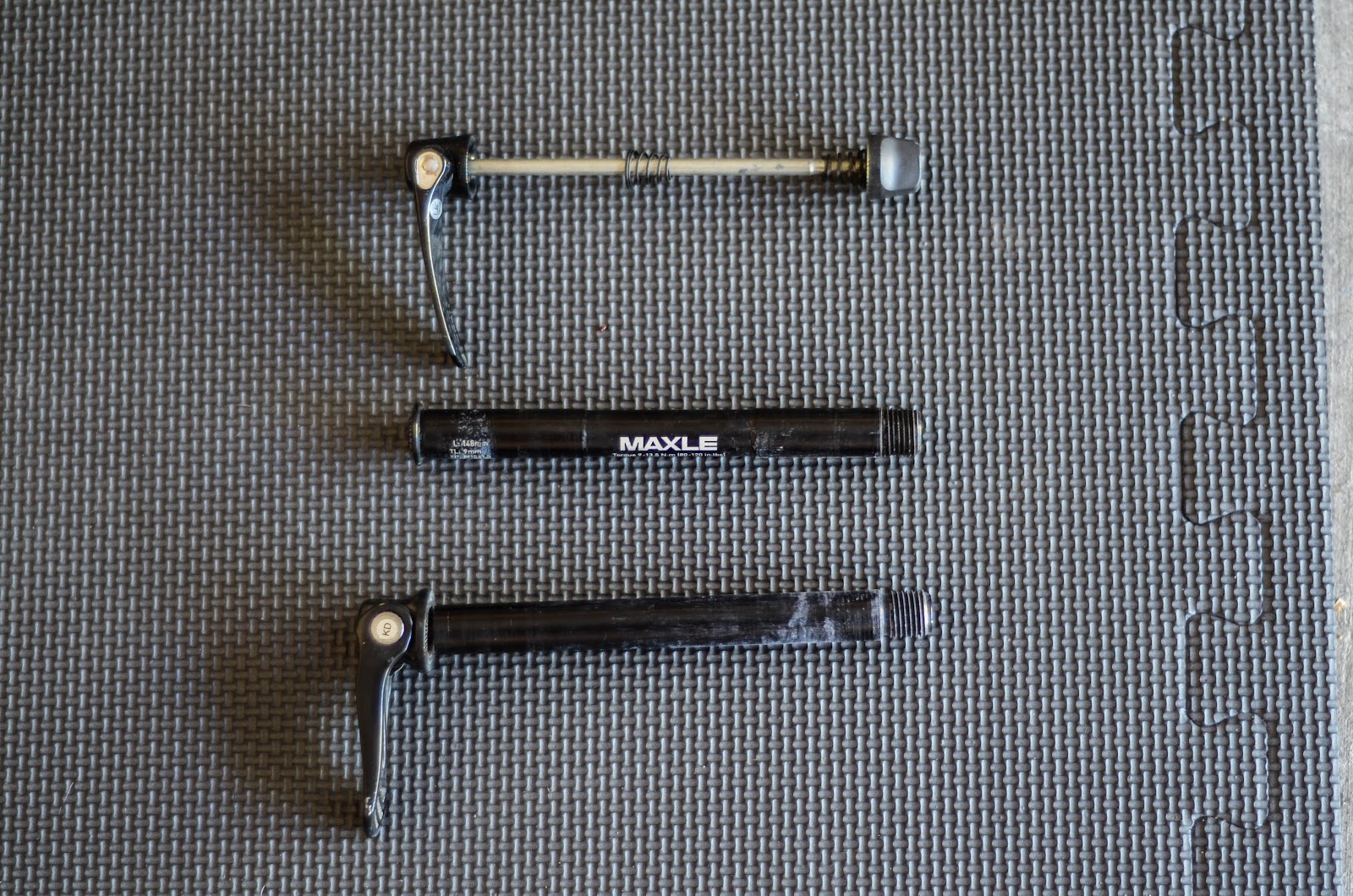
Let’s also take a few moments to talk about hubs.  Not just the hub itself, but how the wheels are bolted/attached to your frame.  We are ALL used to quick release skewers, as these have been used on bikes for quite some time.  The idea is pretty simple as it’s basically an axle that slots into your dropouts and is tightened using a cam pressure system.  For a long time, this was the most common thing seen on mountain bikes as well.  Nowadays, however, the system is completely different.

DSC_4024.jpgDSC_4025.jpg

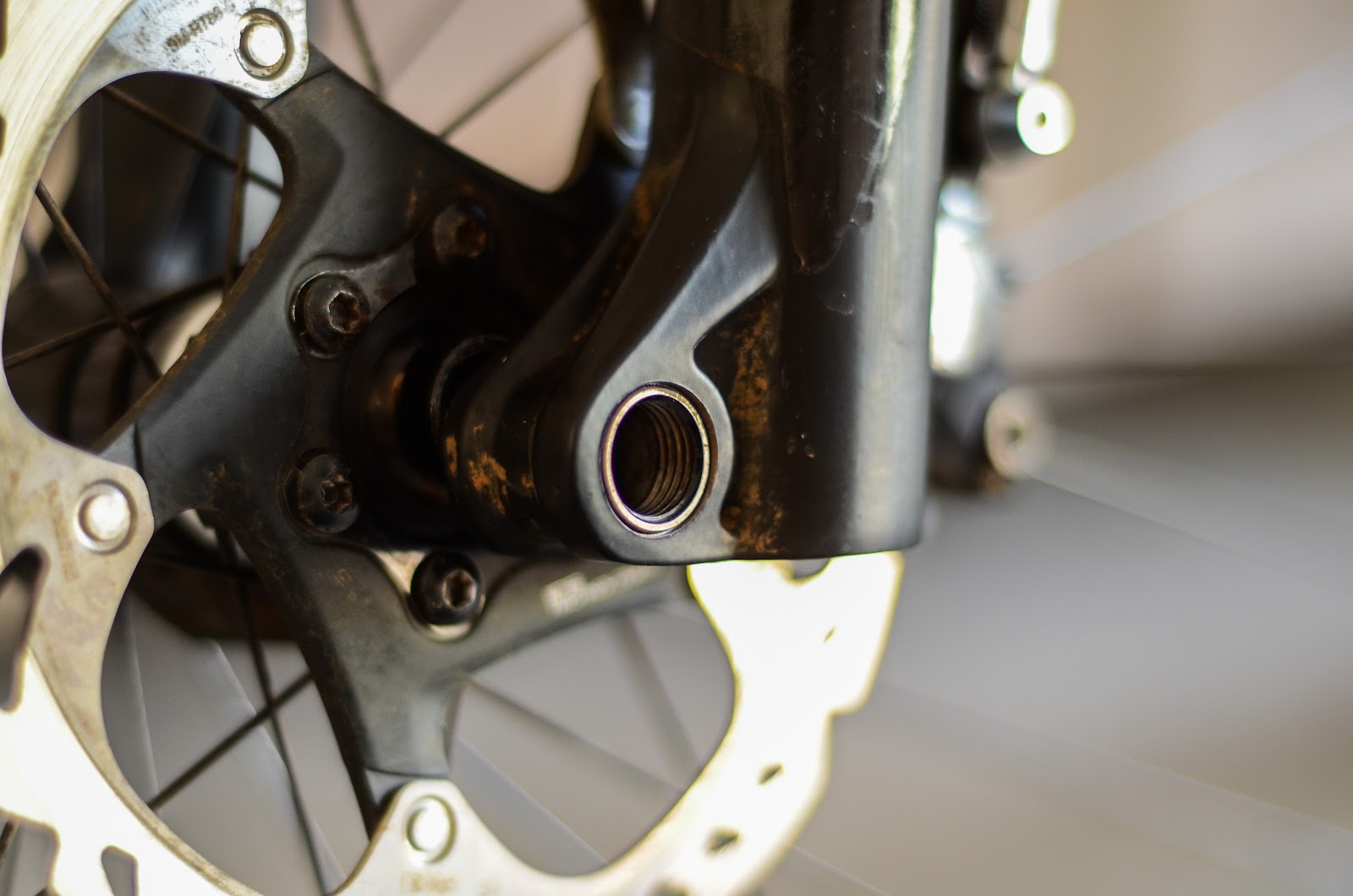
Most off road bikes (this is now beginning to include cyclocross, gravel, and even some road bikes) now use what is called a “thru-axle.” The desire for this system began with a desire to increase the overall rigidity of a bike. Dropouts (the openings into which a wheel’s hub fits) are wider on a mountain bike to help achieve this.  The thru axle is another mechanism that aids this rigidity goal, as the axle itself literally bolts the dropouts together THROUGH the wheel’s hub.

Quick releases are usually 9mm, whereas thru-axles are generally much bigger.  At first, mountain bikes began utilizing thru-axles only in the front while still keeping a quick release in the rear.  Now, however, that has changed to be thru-axles on both the front and rear.  Whereas a road bike has dropout spacing (basically the width between the dropouts) of 100mm in the front and 130mm in the rear - with 9mm quick relases - modern mountain bikes are most commonly 100mm in the front (with a 15mm thru-axle) and 142mm in the rear (with a 12mm thru axle).  

DSC_4026.jpg

Interestingly, the rear hubs themselves are still 135mm, but the frame has 3.5mm cutouts in the rear to allow the hub to be more easily guided into place before the axle is inserted through the frame and hub and bolted tight.

All of this is to say that thru axles represent a stiffer, more robust form of wheel to frame attachment that, in general, results in a more responsive and predictable ride through the trails.  The “size” of your thru axles depends entirely on the type of bike you buy, with 15mm being a common front axle for everything except the biggest hitting (mainly downhill) bikes, which use 20mm.  In the rear, you will most often find 12mm thru axles. The only real downside to a system such as this is that it can take a bit longer to change a flat.  Especially with the axle type that’s in the middle in one of the above pictures, as it requires carrying allen keys. A little extra preparation never hurt anybody, however, and the increased stiffness and precision is DEFINITELY worth it.
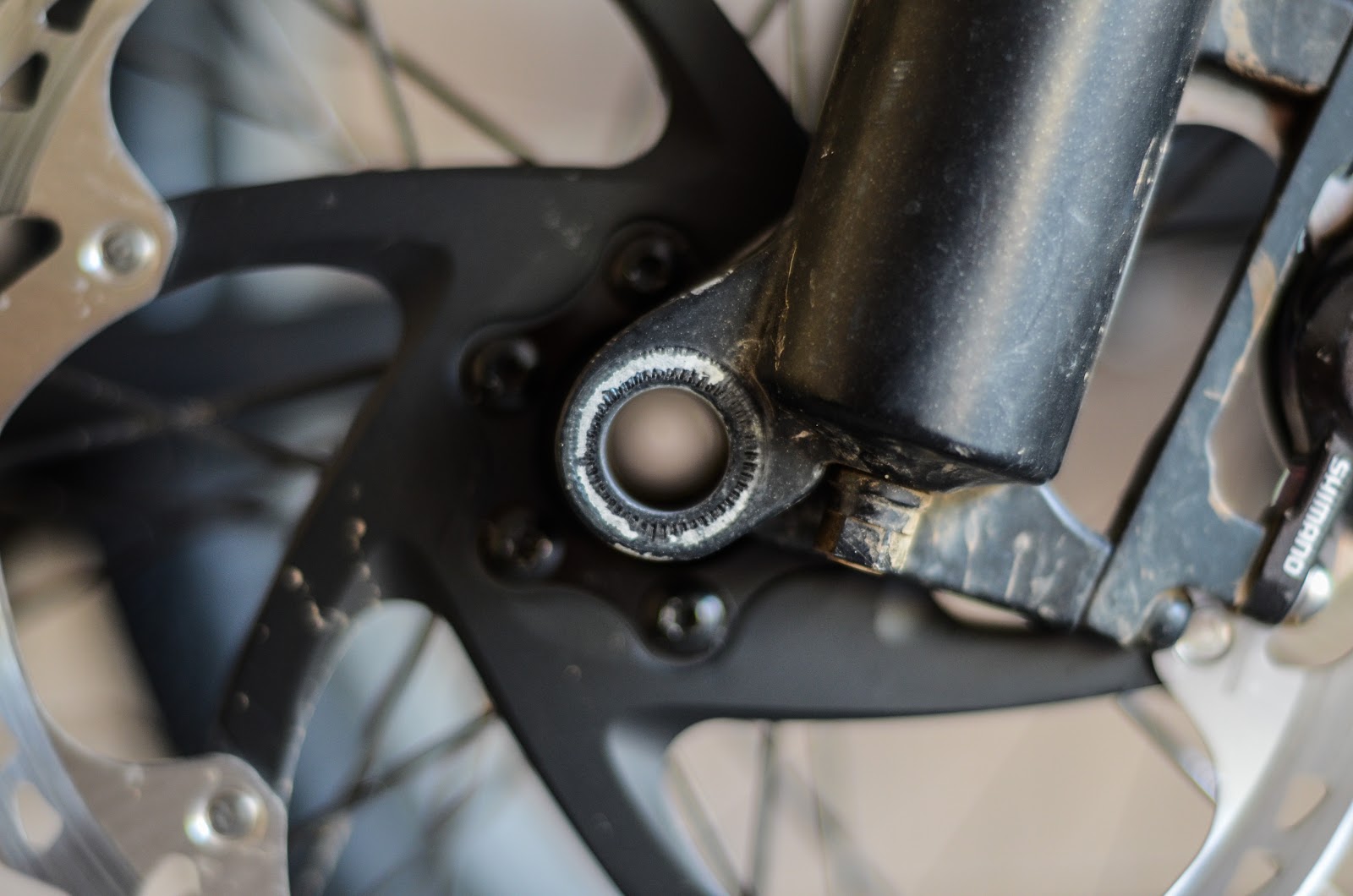
DSC_4027.jpg

Now that I’ve said that, I feel bad for my next and final section.  Like with anything in the bicycle world, nothing remains “standard” for very long.  Enter what is called “boost” spacing.  Most simply, this “standard” (ha. ha.) replaces 100/142mm with 110/148mm.  Big whoop, you say? I agree, mostly. But let’s dive into a little deeper to see what this difference REALLY means.

One of the changes between 26” and 29” wheels is the size of the wheel (umm, duh.). This larger diameter wheel has many benefits, which we’ve already highlighted.  One of the things it has that is potentially a negative, however, is longer spokes.  These spokes, despite being attached to the same width hub (100/135) are significantly longer, and are attached “further out” in the triangle.  The boost standard is designed to allow the triangle to have a wider base - as each spoke is attached to the hub a few mm further outboard - which results in a stronger, stiffer overall wheel.

What may seem like a subtle, small change actually has a huge effect on other parts of the bike.  You must now have wider frame dropouts and a crankset that moves your chainring a bit further out to accommodate the different rear hub spacing (this is done to maintain what’s called the chainline, which is chain deflection - or how straight or not straight a chain is - in the middle of a cassette).  The frame itself has a bit more clearance, which allows for wider tires and better mud clearing.  But the endgame here is that this new “standard’ (I still chuckle every time I hear that in the bicycle industry) really requires entirely new bicycles designed around the standard.  New wheels, new bike frames...it’s almost like the bike industry wants you to buy new stuff!!? Who would’ve guessed it...